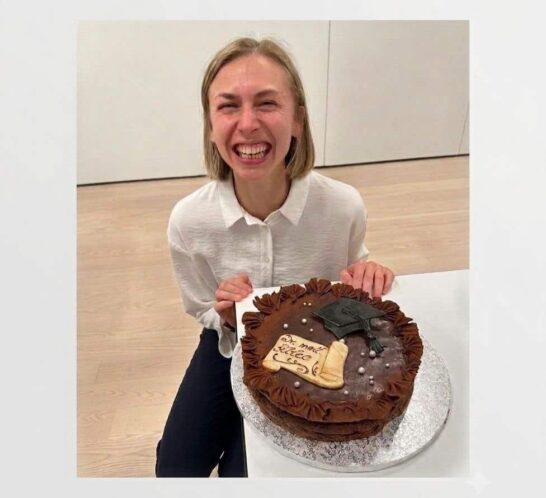
We congratulate Alice Kuhn on her doctoral thesis titled “Gastrointestinal Symptoms, Nutrition, and Thriving in Pontocerebellar Hypoplasia Type 2A.” The thesis addresses survival, diagnosis, and gastrointestinal symptoms in children with PCH2A, as well as their clinical management.
With the newly published article ‘Growth charts for pontocerebellar hypoplasia type 2A’, we are the first to create disease-specific percentiles for PCH2A.
In their recently published preprint “Brain morphometry and psychomotor development in children with PCH2A”, Pretzel et al. analyzed 78 brain MRIs from a total of 57 children with PCH2A.
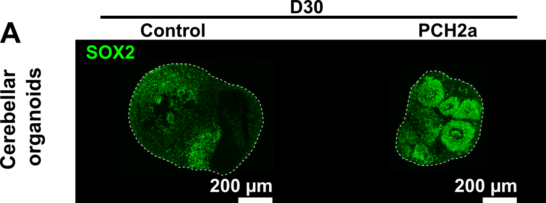
The article originally titled “Human organoid model of PCH2a recapitulates brain region-specific pathology” shows for the first time how the pathology in certain brain regions in PCH2A can be simulated in a 3-dimensional neuronal tissue model (organoid).
The article titled “What’s new in pontocerebellar hypoplasia? An update on genes and subtypes” from 2018 gives an overview on the different PCH subtypes and related genes.
The aim of the study “Natural course of pontocerebellar hypoplasia type 2A” by Sánchez-Albisua et al. was to describe the natural course of PCH2 using a uniform group of patients with the typical PCH2A mutation.